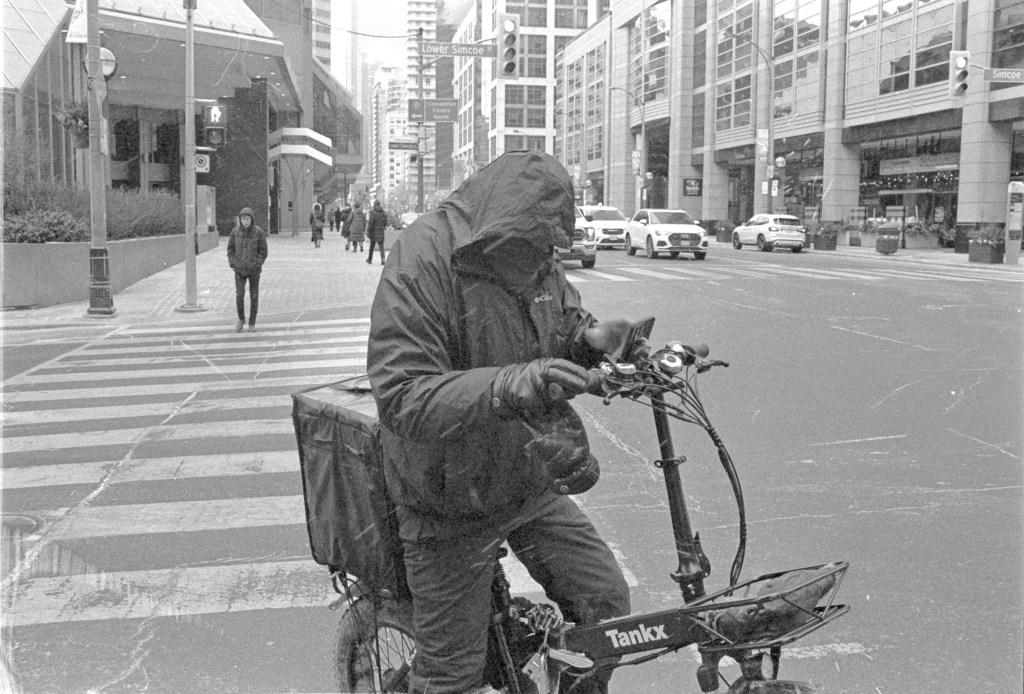
Shutter speed priority (S mode) allows the photographer to manually set the shutter speed for a given exposure while the camera then automatically sets the appropriate aperture and ISO setting.
Usually labelled as S on your camera, it is also shown as TV (for time value) on Canon cameras.
So why use S mode? Using it allows the photographer to concentrate on whether or not to stop action or allow blurring in the image. A faster shutter speed does a couple of things.
First it prevents camera blur which happens when the photographer sets too low a shutter speed and introduces camera shake. Camera shake happens (depending on the lens) with a normal lens around 1/30th of a second. Anything lower and the shaking of your own hands, no matter how small, can introduce a softness or blur to the image.
(Longer lenses like telephotos require higher shutter speeds to reduce or eliminate camera shake. Usually the rule of thumb is to set the camera shutter speed to match the size of the lens. For example a 500mm telephoto lens will require at least a 1/500th shutter speed.)
The second thing S mode can do is at higher settings it can stop all action in the image. With a normal lens again (usually considered a 50mm lens) a shutter speed of 1/60th will stop the motion of a slow walker. A speed of 1/125th of a second will stop the motion of a faster walker. A 1/250th will stop a car and 1/500 will stop a ball being thrown. When we get to shutter speeds of 1/000th we’re stopping race cars and 1/2000th most birds in flight and 1/4000th even wing tips of hummingbirds start to appear sharp. These numbers are approximations and don’t account of the steadiness of the photographer. (Young people can often shoot hand held at lower shutter speeds than seniors. It’s just a fact of nature.)
This control of shutter speed controls time and by that I mean the time the shutter curtain opens and closes.
But it’s not all about freezing motion in your image. Using shutter speed mode you can also create images with long exposure times that will allow for dramatic images of dancers being blurred in their movements or water running in rivers or over waterfalls taking on a silky blurry artistic characteristic.
Landscape photographers who normally prefer manual or aperture modes can use S mode while using a tripod to shoot a very slow shutter speed thus allowing the lens to be almost completely closed down resulting in an image with a maximum depth of field (and everything in focus).
The one thing to remember in shutter priority mode is your camera is likely going to also be automatically adjusting the ISO in the background. While seemingly a good thing there are dangers here which we will talk about soon.
 StreetShooters
Leave a comment