
After paying way more than you thought possible for a new complex digital camera with all kinds of modes and controls and menu items why oh why would you want to shoot in manual mode?
In the old days before digital cameras and even before automation came to 35 mm film cameras all cameras from the beginning of photography were manual cameras.
The oldest manual cameras like those that took a single sheet of 4″ X 5″ piece of film had a film holder at the back. Then there was a bellows between that back plate and a front plate that held a lens which came with no other control that a manual shutter. The earliest cameras didn’t even have a shutter but used a lens cap to remove for a set number of seconds to record an image on the very slow film stock of the time.
That was it. Earliest cameras had no focus (as everything was in focus from a set distance away from the camera to infinity) and no aperture control and the actual shutter speed was measured in seconds even minutes using the lens cap to allow light and stop it as it fell on the single sheet of fillm.
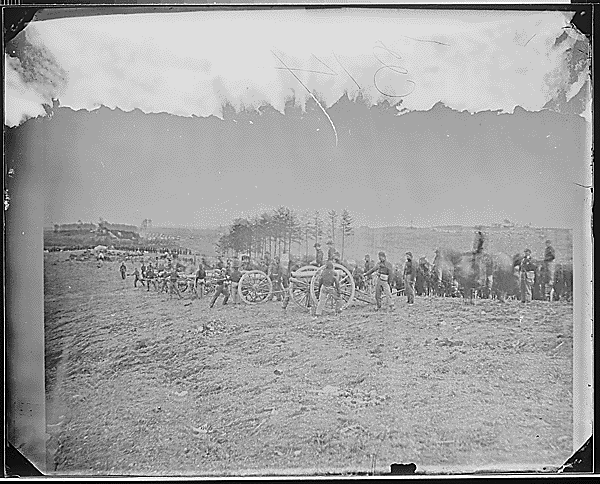
And yet despite this primitive simplistic setup a lot of great photography was taken and published.
Manual mode gives the photographer the ultimate in creative control. Shooting in manual mode will make you a better photographer. Instead of the camera making decisions when it comes to ISO, aperture, shutter speed and white balance it’s now up to you to set your camera to capture the image that you see and not the image the camera thinks you might want.
Manual mode is important when shooting under difficult lighting conditions. A camera set to any other mode can be fooled by changing lighting or errors in metering the light falling on the scene (a favourite of photo instructors is to set a white cat against a black background or a black cat against a white background and let students struggle with cameras set to auto mode). In manual mode you can also better control external flash (single or multiple units) and any of your other settings influencing depth of field or the ability to stop action or allow blurring will be locked in.
Manual mode will also force you to use something called the “exposure triangle” (which is an important topic coming up next) and we will also introduce you to the concept of using an external light meter.
 StreetShooters
Leave a comment