
When we are talking about sensors, does size matter?
Do you really need or even want a full-size sensor or would a micro four-thirds sensor be a better fit?
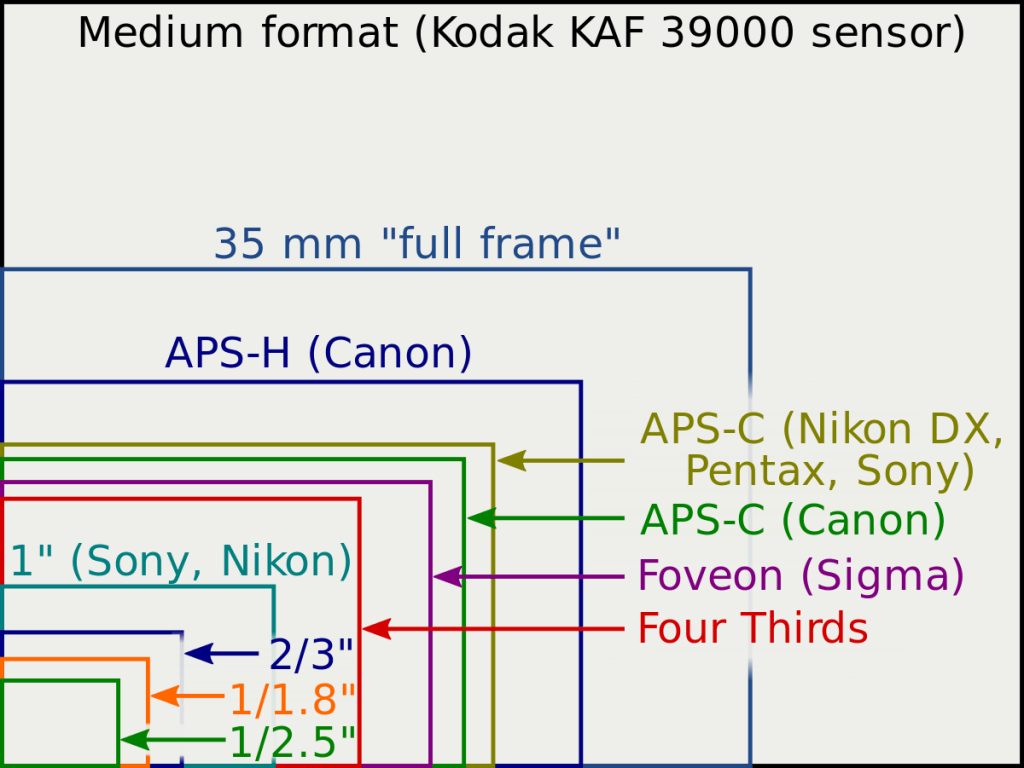
This image from Wikipedia shows the different size sensors that you can buy and a lot depends on your camera model.
For example I shoot micro four-thirds on an Olympus OM-1. Back in my film days I shot 35mm “full frame” and when I went into digital photography I bought a Nikon DX body with a smaller DX sensor.
So why buy a full-frame sensor camera? The full-frame sensor will result in images with more light, detail and the ability to blur the background in portrait shots. They can also have more dynamic range and colour depth. There will be less digital noise and you’re going to have a lot more megapixels to play with if you want to crop your images.
But full-frame cameras come wth some real disadvantages. First is they do cost a lot more and they are significantly larger and heavier than cameras with smaller sensors. You may not want to carry a full-frame camera and a couple of lenses around with you when on vacation for example.
Crop sensor cameras do have some real advantages. Aside from being significantly less expensive crop sensor cameras are smaller, lighter and are easier to carry and shoot especially for those of us with smaller hands.
Crop sensor cameras do come with one amazing advantage. Because the sensor only sees small section of the image as compared to a full-frame sensor using it actually adds magnification to the image.
What happens is if you’re using for example a 300mm Olympus telephoto lens it’s actually the full-frame equivalent of a 600mm lens. A full-frame 600mm lens is expensive and big and heavy while the 300mm Olympus lens is just a little larger than a tall-boy beer can. Add to this Olympus’s in-cameras new stabilization technology which allows you to hand hold a camera as much as four stops slower than cameras without stabilization and you’ve got a camera that can do some amazing things.
This is why so many wildlife and bird photographers have migrated from full-frame cameras to the Olympus (and Panasonic) micro four-thirds format.
Noise (what we called grain in the old film days) is more prevalent in the micro four-thirds images but new advances in post production noise mitigation software has made this much less of a problem.
What this means is shooting at high ISOs which in the past would have been so noisy in micro four-third images as to make them unusable now makes shooting at ISO numbers like 1,600 or even way up to 12,000 doable.
Of course if image quality is paramount you could always go to a medium format digital camera but that’s a topic for another day.
 StreetShooters
Leave a comment